Biography
There’s no handbook for your mid-to-late twenties. Who you are, what you want and where you should be by now are mysteries that you can only assume everyone else has the answers to while you stumble around like an idiot. For twin sisters Inez (vocals/guitar) and Ella Johansson (vocals/keys/drum machine) of 7ebra, it can feel like trying to land a plane with no instructions: you grasp for the right controls and hope you don’t crash the whole thing. It’s a feeling captured across the Malmö duo’s second album, How to Land a Plane. Atop their hookiest and most layered songwriting so far, they chew over the insecurities, frustrations and embarrassments of this stage of life. “It’s about feeling a bit messy, and not getting it right. Having a struggle just existing with yourself,” Inez says.
Growing up in a musical household in Malmö, Inez and Ella pursued their own musical paths, keen to keep their identities separate. “When you’re growing up [as twins], you want your own personality sometimes. It feels like you’re clumped together,” Inez says. 7ebra began as a bedroom solo project of Inez’s; but when she was asked by producer Tore Johansson (The Cardigans, Franz Ferdinand) to play her first show at Tambourine Studios in Malmö, she brought Ella on board for musical backup. The sisters soon found that they worked well together, sibling bickering aside. “If I were to write with someone else, it would feel very scary to me,” Inez says. “We’re not afraid to say if we don’t like something — it’s very open.”
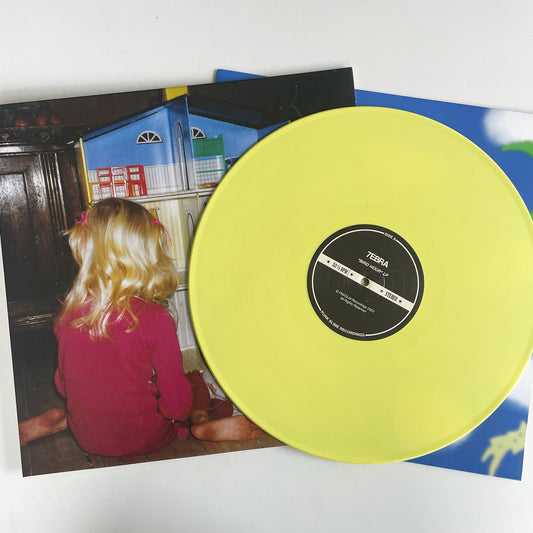
The duo went on to record their 2023 debut album, Bird Hour, with Tore. It was released to attention from the likes of Pitchfork and DIY Magazine and a victorious touring cycle including trips to the UK, US and Japan, appearances at End of the Road Festival and SXSW, and support slots for the likes of Paolo Nutini and Arab Strap. The sisters finished the cycle with a newfound confidence in their music. But when trying to write for a new record, they found themselves in a slump. “I feel like Inez especially felt a lot of pressure,” Ella says. Inez agrees: “I was very stuck, and you can’t really write if you’re not living in the world.” It changed when she got a job as a cemetery groundskeeper, ending a long spell of unemployment. “It’s a very slow job, so you think a lot, and that’s when I started to write again,” she says.
Tore Johansson was by now living in Portugal, but he introduced the sisters to his friend, fellow Malmö producer Jens Lindgård. Lindgård became a vital partner in the writing process, helping to flesh out and complete the songs that Inez and Ella were bringing to him. Lindgård encouraged them not to worry about how they would recreate songs live, instead pushing them to use the studio and follow their instincts. He became an emotional cheerleader, too: “If something goes wrong we can get kind of low and insecure. But he’s like, ‘Stop!’ He’s been good at picking us up,” Ella says.
The songs on How to Land a Plane are more extroverted than the insular and shrouded sounds on Bird Hour, full of buzzing synths, insistent drums and infectious hooks. “I think we wanted to have more fun onstage,” Inez says. The effect can be to create a winking irony in songs that are dark and sad at their core. On the chorus of “Dinner and a Movie”, for example, a song that’s about the shame and regret after coming out of a party hole, the sisters sing “I’m seeing stars everywhere” as if it’s the effects of romance they’re feeling rather than too much booze. Meanwhile, on “Normal Song” — “a pop song about writing a normal song in which you wanna cry in an open field” — they make the words “I wanna cry in an open field” sound positively aspirational.
The disturbing effects of capitalism on the experience of young adulthood are present across the album. “It’s really hard to find a job and an apartment these days. I feel like you’re younger kind of longer,” Inez says. “I need an education / Particular set of skills / Still living at my mother’s / Got nothing to bring to the table, I’m sorry,” she sings, paraphrasing Liam Neeson in Taken, on “I Have To Buy Stuff,” a track about simultaneously being exhausted with consumerism and feeling a perverse desire to keep consuming. On “Bored Like A Dog”, she sings about the indignity of mindless work, the song building to a fuzzed-out crescendo against droning vocals. The duo were inspired by the late-capitalism satire of the TV show Severance, something which shows up again in “Night Smog” — a short and eerie track that combines Severance imagery with that of a mysterious pharmaceutical lab near their home in Malmö.
Other songs are deeply introspective. On “Forming”, Inez channels her love of Elliott Smith, with double-tracked vocals and haunting melodies. It’s a sister song to “Dinner and a Movie”, about shame and desperation. “The night turns me pathetic / Predator losing teeth,” she sings. “Lime Green Jello” is similarly subdued; it was one of the songs that resulted from Inez’s job at the cemetery, overthinking while she pulled up weeds and cleaned gravestones. “I get stuck in loops, examining my personality and identity, which is very frustrating and doesn't really do anything good,” Inez says. “[It’s about] obsessing over how you might be perceived, comparing yourself to others you think are more likeable, becoming jealous and insufferable. The conclusion is I'm just a person with nothing exciting or original to say sometimes.” “Patient Boy,” meanwhile (the title a reference to Fugazi’s “Waiting Room,” which is also referenced on “I Have To Buy Stuff”) sets gently plucked guitar against a soft, delicate vocal performance, as Inez narrates a relationship challenged by mental health struggles. “I wanna love you in a different way,” she concludes.
Across the record, as the sisters navigate the onset of adulthood in an inhospitable world together, they seem to merge and blur; voices bouncing off of each other, instruments trading lead. It’s the sound of two people who understand each other better than anyone, and a unique creative partnership coming into its own. How to Land a Plane marks 7ebra as one of the most exciting bands to break through from Sweden’s indie scene in some time.


 Sold out