Biography
“I wanna live on the wings of desire,” are the first words Hemi Hemingway sings on his new album, Wings of Desire. There’s a reference here, of course, to the 1987 Wim Wenders classic about an angel who gives up his wings so as to experience human love, the aesthetics of which all make sense within Hemingway’s universe: the grimy yet romantic pulse of 1980s Berlin, the way its detached black-and-white gives way to full colour, its post-punk soundtrack. But more than that, this opening line is a statement of intent which fuels the entire album. Grappling with the end of a long-term relationship and a relocation from London to New Zealand, Hemingway’s songwriting began to explore the possibilities of a new, uncertain future.
“A friend of mine described it as a yearn-fest,” Hemingway laughs. “Which I think is really funny, but it’s fitting as well, because in a lot of these songs there’s definitely a yearning for something. I think I had been at a point in my life where I felt really disconnected from myself and from my own desire, and from feeling desirable to other people, and I suppose I’d just been experiencing a bit of dissociation from myself overall. So writing these songs was a grieving of this long-term relationship, but it was also a sort of rediscovery of myself.” Fittingly, on the cover art he stands, phoenix-like, in front of a fire, both shadow and flame sharing equal space.
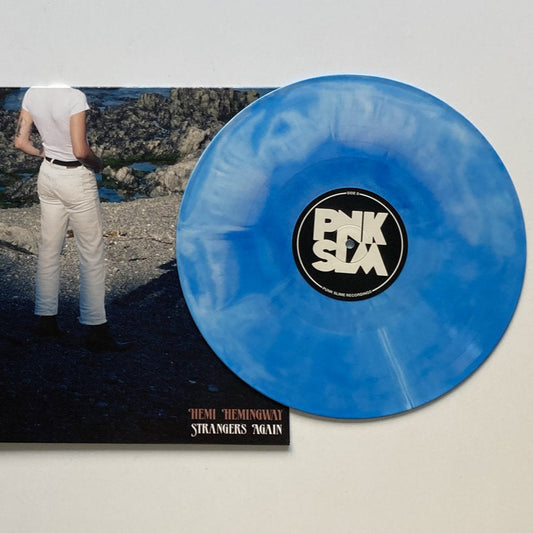
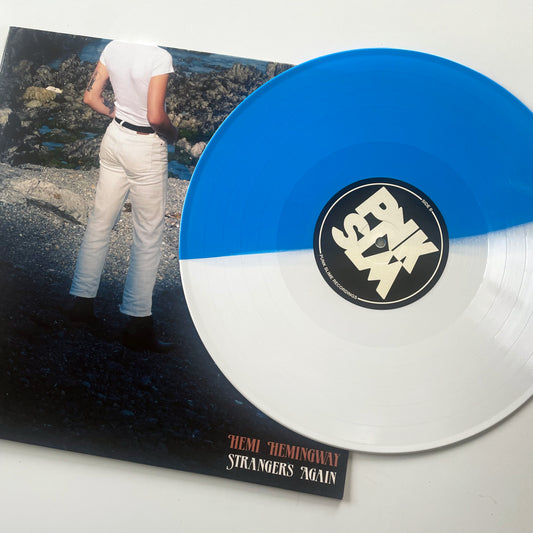
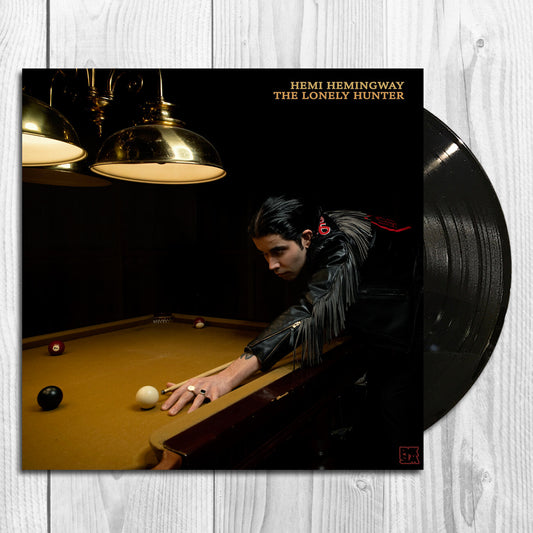
Wings of Desire is the follow-up to Hemingway’s acclaimed 2023 debut album Strangers Again, which was bursting with ‘50s crooner and ‘60s rock-and-roll romance. The project began while Hemingway was living in London, immersed in the post-punk and garage-rock scenes there; when the Covid pandemic struck, he took the opportunity to create a studio project with which he could experiment with other musical directions, a new persona, and a more personal and honest mode of songwriting. “I was trying to write about things like love, where I hadn’t been able to in the past,’ he says. The name Hemi Hemingway was chosen as a nod to his Māori heritage, with an intention to express his connection to an identity from which he has often felt forcibly detached. Upon launching the project, he released the 2021 EP The Lonely Hunter, headlined sold-out shows at Moth Club and the Shacklewell Arms, and landed support slots for the likes of Kurt Vile and Night Beats.
In 2022, soon after finishing Strangers Again, Hemingway moved back to Wellington, New Zealand after almost nine years in the UK. It was a marked change not just to his physical environment, but his creative one too; far removed from the hectic grind and music industry attention of London, Hemingway found that New Zealand’s music scene reflected a more experimental and innocent feeling. “Things can end up being a bit more raw and explorative here, because there’s this feeling of well, who’s gonna hear it or care anyway? So you kind of just make it totally for yourself.” Having largely self-recorded his previous work, he worked on Wings of Desire with producer James Goldsmith. Together, they retooled Hemingway’s demos, in some places leaving them almost unchanged from those initial recordings and in others taking a finetooth comb to structures and instrumentation. With contributions from drummer Josh Dominikovich, sax players Zelia Shaw and Toby Leman, backing vocalists Lucy Beeler, Frances Grass, Dean Blackwell, Clare McNamara, Arran Cargill-Brown and Tessa de Lyon, plus featured vocalists Georgia Gets By and Vera Ellen, it ultimately became the most collaborative of Hemi Hemingway’s work thus far.
Wings of Desire combines the romantic ‘50s and ‘60s influences that are familiar to Hemi Hemingway with a newfound obsession with gothy ‘80s post-punk and New Romantic. There are sublimely dramatic, indulgent moments (“Wings of Desire”, “Promises”, “If Love Is A Winter’s Day”), juxtaposed with slinky, sultry, pulsing ones (“This City’s Tryna Break My Heart”, “Long Distance Lover”, “(To Be) Without You”). Hemingway’s baritone can pivot from sweet and vulnerable to husky and dangerous. The opening title track is a heady cloud of desire, yearning and regret, with its sax, synth and piano leading to a transcendent chorus. Meanwhile, the woozy and beckoning synths of “Desiree” soundtrack an ode to the innocent, clumsy, yet all-consuming version of love that came with youth: “When did we become the grown-ups?” Hemingway laments. Then there’s the playful sexiness of “Long Distance Lover”, with its hip-loosening bassline and Hemingway’s smouldering vocals navigating the re-ignition of desire between lovers who have grown distant.
Hemingway delves movingly into his breakup on “Promises” and “If Love Is A Winter’s Day”; on the former, amid softly howling guitar and rhythmic piano, he leans fully into the drama and grief of the parting, while on the latter, he reassuringly recasts the end of a relationship as the beginning of a new, gentler phase of a loving friendship. Two songs, meanwhile, dive into rawer and more deeply personal topics. The Depeche Mode-esque “6th April ’13” sees Hemingway unpack a traumatic assault from his past, finding the courage to face this trauma upon returning to his home city; its quiet dignity and tight-wound tension eventually lead to a powerful and cathartic end section. And on the closing track “No Future No Future No Future”, Hemingway presents his most overtly political song, exploring the attempts of the New Zealand government to legislate away the rights of Māori people: “It’s an acknowledgement of how bad it already is, and how, if pushed, we’ll have no choice but to burn the whole system to the ground,” he says.
Ultimately, Hemingway describes Wings of Desire as a rebirth. It’s not just a sonic and aesthetic invigoration, but a culmination of his attempt to capture something honest and pure through the conduit of Hemi Hemingway. “It feels like I have connected with Hemi Hemingway a lot more with this album,” he says. “I’m trying to lean in fully, and do it unapologetically. It feels a lot more like me.”